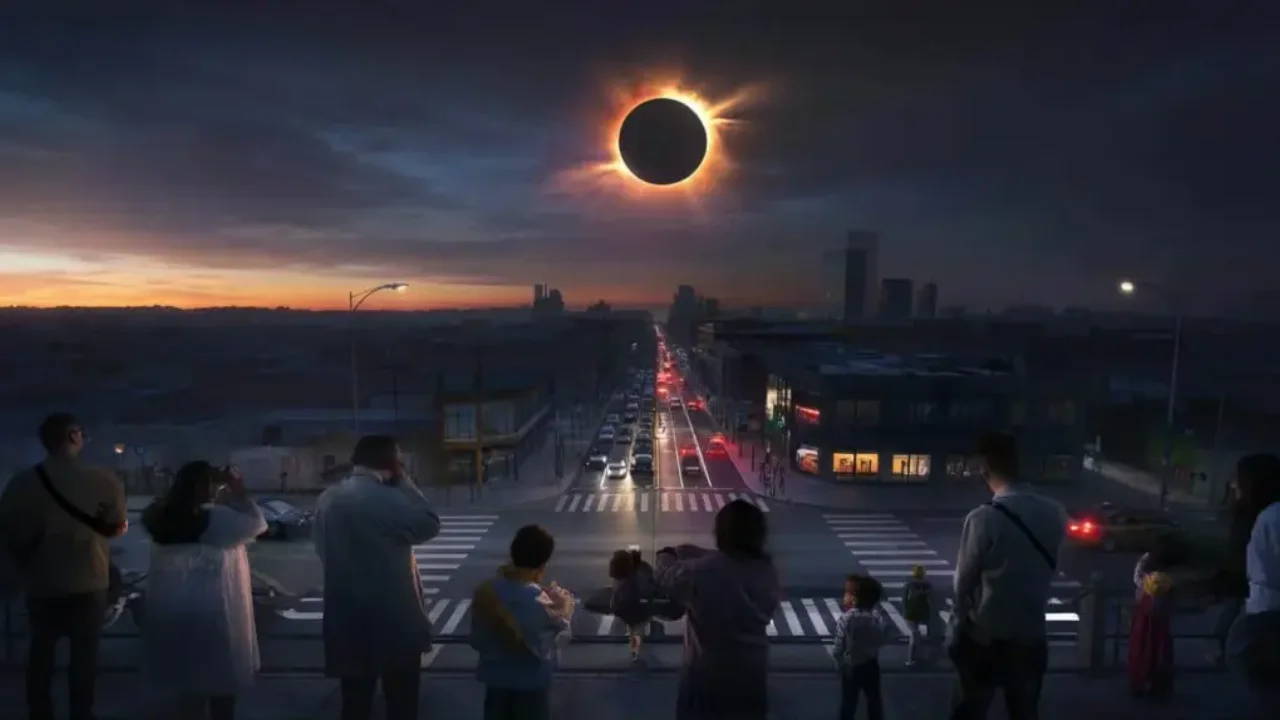
Eclipse of the century: The eclipse of the century is already making waves among astronomers and skywatchers. Even though it is still far in the future, this event is already being hailed as one of the most extraordinary sky shows in human history. Imagine standing under a sky that suddenly darkens at noon, where the world around you goes quiet, shadows stretch strangely, and for nearly six minutes, the Sun disappears completely. It will be the longest land-based solar eclipse in a 2,000-year period, and its impact will be felt across continents and generations.
This blog will explore what makes the eclipse of the century so special, when and where it will happen, and how people are already preparing for it. From the science behind the event to the best places to witness it, we will break everything down so you can appreciate the scale and importance of this incredible celestial moment.
Eclipse of the century: What makes it different?
Unlike typical solar eclipses that last just a couple of minutes, the eclipse of the century will bring almost six full minutes of darkness. That alone sets it apart. This event is not just about how long the eclipse lasts, but about how rare and perfectly timed the conditions are. The Moon will be at its closest point to Earth, making it appear larger. At the same time, Earth will be at its farthest point from the Sun, making the Sun appear smaller. This rare alignment creates the perfect setup for a long-lasting total solar eclipse.
Skywatchers in northern Brazil, the Guyana coast, and parts of West Africa will have front-row seats to this phenomenon. Weather patterns, travel logistics, and even future technologies are being considered in preparation. Some scientists believe this will be the most studied and possibly the most traveled-for eclipse in history. Whether you are a casual observer or a serious eclipse chaser, this is the event to plan for.

Overview Table
| Key Information | Details |
| Date of Eclipse | 16 July 2186 |
| Maximum Totality Duration | 7 minutes and 29 seconds |
| Usable Darkness Duration | Close to six minutes |
| Type of Eclipse | Total Solar Eclipse |
| Best Viewing Locations | Northern Brazil, Guyana coast, West Africa |
| Reason for Long Duration | Moon close to Earth, Earth far from Sun |
| Path Width | Around 200 kilometers wide |
| Sky Conditions Expected | Twilight-like sky, drop in temperature, eerie silence |
| Historical Significance | Longest land eclipse from year 1000 to 3000 |
| Future Planning Importance | Encourages preparation, storytelling, and generational skywatching |
Eclipse of the century: when the six minutes of darkness will strike
Mark your calendar for 16 July 2186. That is when the eclipse of the century will sweep across parts of the world and create a sky spectacle like no other. While it will peak at 7 minutes and 29 seconds, most viewers in the prime locations will experience nearly six full minutes of totality. That is not just enough time to notice the change in light but enough to feel the atmosphere shift completely.
To put that into perspective, the 2017 Great American Eclipse lasted just over two minutes in most locations. That event alone caused highways to jam, hotel prices to spike, and small towns to swell with tourists. Now imagine an eclipse three times longer. The frenzy, the emotion, and the planning will be on a whole new level.
Best places on Earth to watch the “eclipse of the century”
If you want to catch the longest stretch of darkness, head to northern Brazil or the coastal region of Guyana. These areas will be in the direct path of totality, meaning they will experience the full effect of the eclipse. From there, the shadow will travel across the Atlantic and land on the western coasts of Africa, touching Sierra Leone, Liberia, and Ivory Coast.
These countries will see several minutes of totality, but the exact duration will vary slightly depending on your location within the path. Observers in these zones will watch the sky go dark as if nightfall has arrived early, with a glowing ring of sunlight surrounding the Moon.

Why so long this time?
What makes this eclipse so special is the unique combination of cosmic factors. First, the Moon will be relatively close to Earth, appearing larger than usual. At the same time, Earth will be near its farthest point from the Sun. That makes the Sun look slightly smaller. This size difference allows the Moon to completely cover the Sun for a longer period than usual.
Also, the eclipse will occur along Earth’s equator, where the Moon’s shadow moves more slowly over the surface. This slower movement extends the duration of totality. All these elements come together to create the perfect recipe for the longest land-based solar eclipse for thousands of years.
How to prepare, what to expect, and what most people get wrong
Preparing for an eclipse is not just about having the right gear. It is about planning the experience. People often underestimate how quickly time flies during an eclipse. Many get caught fiddling with cameras and forget to actually look up. Veterans of past eclipses always say the same thing: test your equipment before the big day, then focus on being present.
If you plan to travel, pick your location carefully. Aim for the center of the eclipse path. Even a few kilometers outside it can turn a total eclipse into a partial one. Pack extra eclipse glasses, a paper map, and a simple itinerary. Weather can change, so always have a backup viewing site in mind.

Why this far‑future eclipse already matters today
Even though it is more than 150 years away, the eclipse of the century is already sparking imagination. It is a reminder of how deeply human beings are connected to the sky. Knowing the exact second it will happen shows the power of science. But more than that, it shows how we pass down wonder across generations.
Imagine your descendants standing on a beach in Brazil or sailing under the Atlantic sky, watching the Sun disappear. They will know we thought of them. The event becomes more than just astronomy. It becomes a story, a family connection, and a moment we gift to the future.
FAQs
Will this really be the longest eclipse in history?
Yes. The 16 July 2186 eclipse is set to be the longest total solar eclipse on land between the years 1000 and 3000, with a peak totality of 7 minutes and 29 seconds.
Where should I be to see the full eclipse?
The best locations include northern Brazil, the Guyana coast, and parts of West Africa such as Sierra Leone and Liberia. These places lie in the direct path of totality.

Is it dangerous to look at the eclipse?
Yes, unless you are in the full totality phase. You must use certified eclipse glasses during all partial phases. Only when the Sun is completely covered is it safe to look directly.
Why talk about this now if it is in 2186?
Because it allows families, educators, and dreamers to prepare and pass down knowledge. It connects us with the future and reminds us how far science can see into time.
Can I watch it from Europe or North America?
Not fully. These regions will only see a partial eclipse. To witness the full effect, travel to locations along the path of totality.