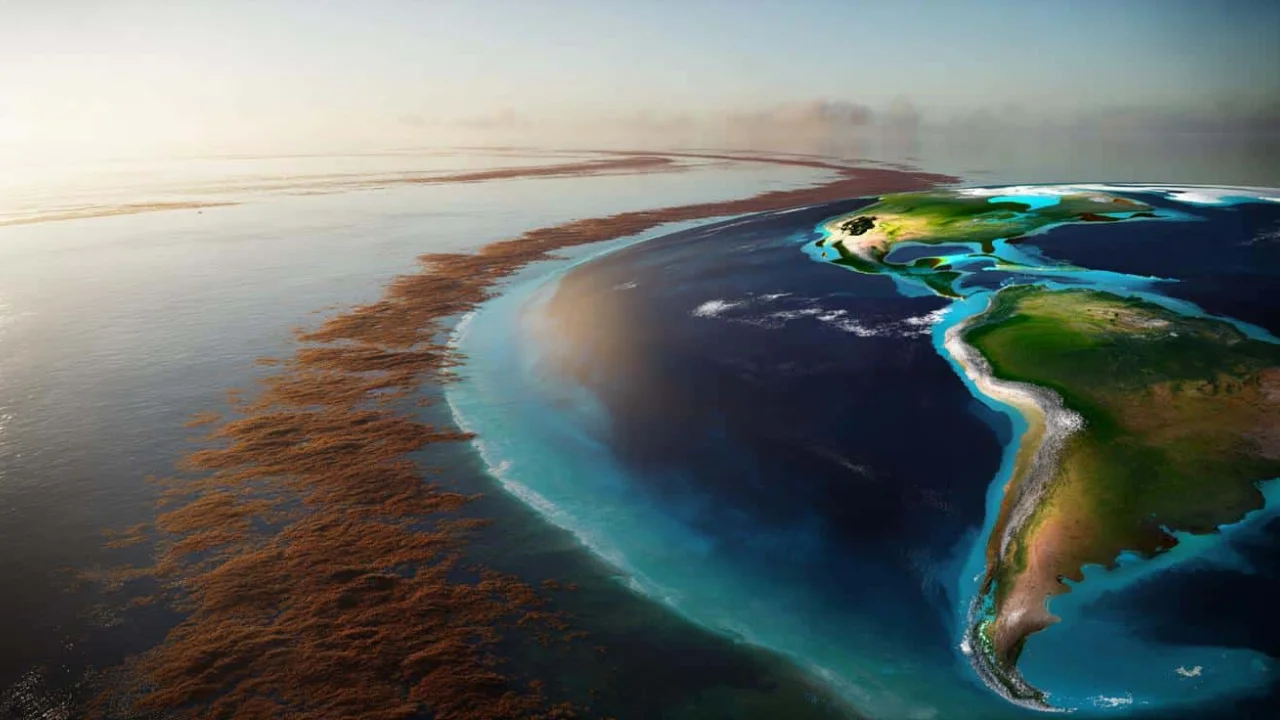
The Atlantic Sargassum Bloom: The Atlantic Sargassum Bloom is no longer a strange phenomenon only scientists talk about. If you have been to a tropical beach in the last few years, chances are you have seen or smelled the effects of this growing seaweed problem. Stretching from the Amazon to the coast of West Africa, this floating mass of algae is now affecting marine life, tourism, and coastal communities in serious ways.
Once a seasonal occurrence, the Atlantic Sargassum Bloom has now turned into a yearly struggle for many countries. It is not just an environmental curiosity. It is a visible symptom of climate change, pollution, and poor land management all rolled into one. This article will break down what is causing this bloom, how it is impacting people and ecosystems, and what efforts are being made to handle it.
The Atlantic Sargassum Bloom: An Oceanic Warning Sign
The Atlantic Sargassum Bloom is a belt of brown seaweed floating across the Atlantic Ocean, and it has become the largest seaweed bloom in the world. While the algae naturally exist in the ocean and provide important habitats for marine life, the recent overgrowth is anything but normal. Fueled by excess nutrients from rivers, warming ocean temperatures, and shifting ocean currents, this bloom has turned into a fast-spreading problem.
From space, it may look calm and even beautiful, but the reality onshore is messy. It smells, it disrupts tourism, and it harms marine animals. Coastal communities are spending millions to clean it up, and in some cases, the seaweed is piling up in massive mounds, destroying the natural beauty of beaches. Understanding the bloom means understanding what happens when the balance of nature is thrown off by human activity.

Overview of the Atlantic Sargassum Bloom
| Key Detail | Information |
| Origin of the Bloom | Amazon River and nutrient-rich runoff |
| Affected Ocean | Atlantic Ocean between Brazil and West Africa |
| First Major Detection | 2011 via satellite imagery |
| Size | Can stretch thousands of kilometers across the ocean |
| Natural Role | Habitat for fish, turtles, and other marine species |
| Current Impact | Coastal pollution, marine life death, tourism losses |
| Human Health Risk | Releases gases like hydrogen sulfide causing breathing issues |
| Climate Link | Warmer ocean waters increasing bloom size and frequency |
| Commonly Affected Areas | Caribbean, West Africa, Gulf of Mexico |
| Ongoing Solutions | Cleanup efforts, recycling seaweed, early-warning systems |
A mysterious brown band that keeps getting bigger
Satellite images show it clearly now. A long, brown band twisting its way across the Atlantic, growing bigger every year. This is the heart of the Atlantic Sargassum Bloom, and it is now recognized as the largest floating biomass on Earth. What once came and went with the seasons now seems to be a regular feature, returning each year with more force and covering greater distances.
The impact is anything but minor. In places like Barbados, locals are waking up early to shovel piles of heavy seaweed from the sand. Tourists are canceling vacations because of the smell and water quality. Some beaches have even closed temporarily. For fishermen, the bloom means damaged gear and fewer fish. As the bloom keeps growing, the question becomes louder: how did this get so out of hand?
When a natural system flips out of balance
The sargassum belt was once considered a vital part of ocean biodiversity. It offered cover and shelter in the open ocean, acting as a floating reef of sorts. But now, things have changed. Instead of supporting life, the overgrown mats are smothering it. Fish are dying in trapped zones of low oxygen, turtles struggle to get to nesting sites, and coral reefs near shore are being covered.
At the center of this shift is nutrient pollution. Fertilizer runoff from farms, sewage from coastal towns, and debris from deforestation are pouring into rivers and finding their way into the Atlantic. Add warming water and slow-moving ocean currents, and you get perfect conditions for a bloom. This is not nature behaving badly. This is nature reacting to human-caused overload.

The trouble starts when that ribbon gets supercharged
What once helped sailors find fish is now a hazard to both people and wildlife. When this brown ribbon of sargassum hits land, it can pile up waist-deep on beaches. After just a few days, the buried layers begin to rot, releasing gases like methane and hydrogen sulfide. The smell is strong enough to turn tourists away, but worse, it can affect human health.
For local residents and workers, these gases can cause headaches, eye irritation, and even breathing problems. Children, the elderly, and people with asthma are most at risk. Fishermen are also paying the price. Boat engines clog with seaweed, and fishing zones become lifeless. The bloom is not just an eyesore. It is a health hazard and an economic threat.
What can be done when the sea delivers a problem to your doorstep?
Across the Caribbean and West Africa, governments and communities are trying everything. Some use floating barriers to block the seaweed from reaching shore. Others deploy boats to collect the bloom while it is still in open water. On land, tractors and large cleanup crews work every day to clear the beaches. But the work is expensive and never-ending.
There is a growing interest in finding ways to use the sargassum instead of just dumping it. Researchers are developing methods to turn it into fertilizer, bricks, packaging materials, and even biofuels. Early-warning systems are also improving. Satellites now track the bloom’s movement, giving coastal towns time to prepare before it arrives. These responses are promising, but the real solution lies upstream—in stopping the nutrients that feed the bloom.

A brown ribbon that keeps asking the same question
Look out at the ocean from Mexico, Senegal, or St. Lucia, and chances are you will see the brown band floating by. It is not just a bloom. It is a message. Our actions on land—whether it is farming, waste disposal, or city development—are coming back in the form of this floating problem. The Atlantic Sargassum Bloom is not random. It is a response.
Every year, the bloom reminds us that the environment does not have boundaries. What we do in rivers, on fields, or in cities can eventually reach the sea. This is not about assigning blame. It is about recognizing the connection and acting on it. Whether we choose to treat it as a warning or just background noise will shape what the world’s oceans look like in the future.
FAQs
What causes the Atlantic Sargassum Bloom to grow so large?
The bloom is mainly caused by excess nutrients from rivers, warmer ocean temperatures, and shifting currents that help spread and grow the algae.
Is sargassum dangerous to human health?
Yes, when it decomposes, it releases gases like hydrogen sulfide that can cause respiratory issues, headaches, and nausea, especially for vulnerable individuals.

Can sargassum be used for anything useful?
Yes, researchers are finding ways to recycle it into fertilizers, biofuels, building materials, and biodegradable packaging.
Which countries are most affected by the sargassum bloom?
Coastal countries in the Caribbean, parts of West Africa, and areas around the Gulf of Mexico are among the most affected.
Is there a way to predict when the sargassum will hit the shore?
Yes, satellite-based early-warning systems can track and forecast the movement of the bloom to help coastal communities prepare in advance.