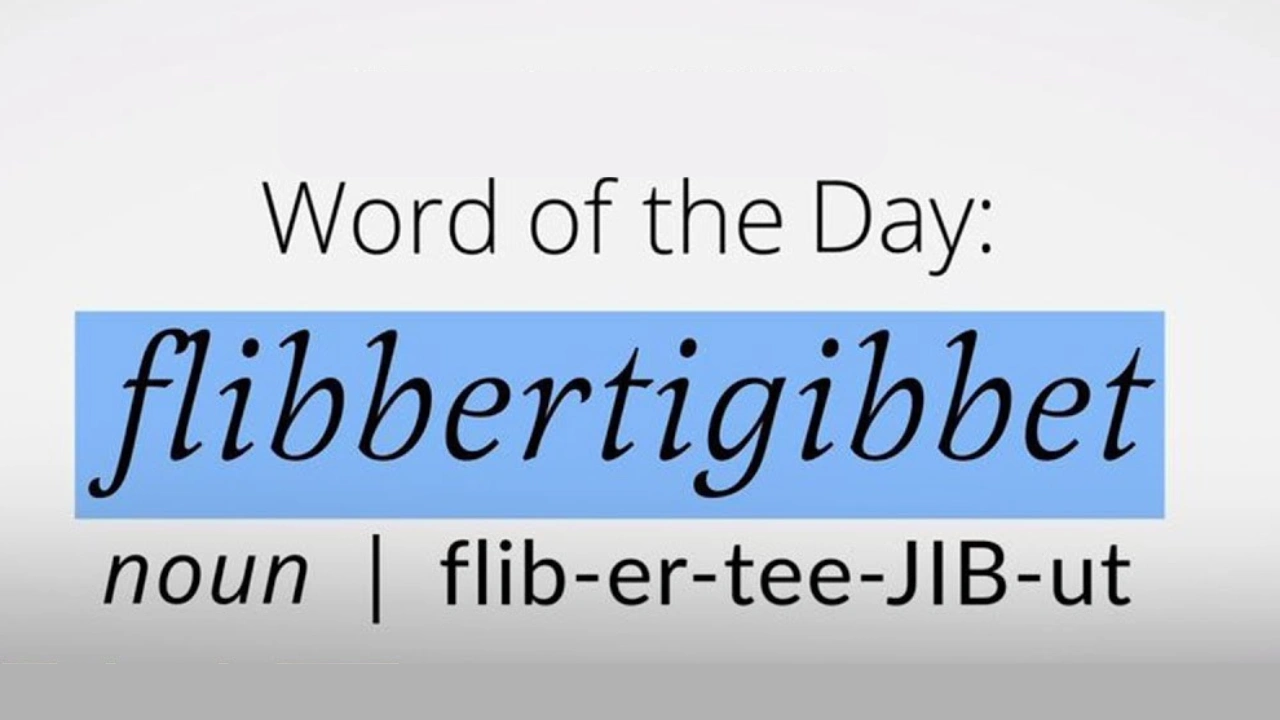
Word of the Day invites us to discover words that spark curiosity and color our language. One such word is flibberigibbet, a term that sounds whimsical but holds real descriptive power. This rare English word doesn’t belong to slang or trendy expressions. It has roots that reach back through centuries and remains a perfect way to capture a certain kind of lively, scattered personality.
This article explores what flibberigibbet means, where it comes from, and how it’s used in today’s language. We’ll look at how it moved from folklore to friendly chatter and why it still matters in conversations, stories, and everyday speech. With its playful tone and rhythmic sound, this Word of the Day offers more than just vocabulary. It brings history, humor, and human nature into focus.
Word of the Day: Meaning, Tone, and Modern Use
When we highlight a Word of the Day, we’re not just adding to vocabulary. We’re exploring how language reflects people. Flibberigibbet is a noun used to describe someone who is extremely talkative, easily distracted, or filled with nervous energy. The word paints a picture of someone who bounces from topic to topic, often in a charming or amusing way.
This term is rarely meant to insult. Instead, it suggests a light, affectionate observation of behavior. It’s often used in storytelling, casual conversation, or writing that aims to be vivid and fun. While it wouldn’t appear in formal documents or reports, flibberigibbet is right at home in a novel, blog, or lively dinner table chat. This makes it both a rare and versatile tool in everyday English.

Flibberigibbet Overview Table
| Aspect | Details |
| Word Type | Noun |
| Meaning | Someone who talks a lot or shifts attention quickly |
| Tone | Playful, light-hearted, not insulting |
| First Recorded Use | 1500s England |
| Original Context | Name for a mischievous spirit |
| Evolution of Use | From folklore to informal personality description |
| Pronunciation | Flib-uh-ree-JIB-it |
| Common Contexts | Informal speech, creative writing, humor-based descriptions |
| Uncommon in | Legal writing, academic papers, corporate communications |
| Appeal | Memorable sound, vivid mental image, non-critical tone |
Roots in Folklore and Historical Use
Back in the 16th century, flibberigibbet wasn’t just a funny word. It was used in religious and folk texts to name a mischievous spirit blamed for chatter and confusion. In these early references, the word had a supernatural feel and was tied to beliefs about demons or noisy tricksters. The name suggested that some invisible force was behind a whirlwind of noisy distractions.
As time passed, belief in such spirits faded, and the word’s meaning began to shift. By the 1600s and 1700s, writers started using flibberigibbet to describe people, not spirits. It became a metaphor for someone who behaves in a similar way—jumping from idea to idea, full of noise and energy. The change from myth to metaphor is something English does often. Words that begin in stories or symbols often settle into daily speech in new, more human-centered ways.
Why the Sound Matters
The structure of flibberigibbet is part of what keeps it alive. The word rolls off the tongue with a rhythm that’s almost musical. Pronounced Flib-uh-ree-JIB-it, it starts soft, builds in the middle, and ends with a crisp finish. This sound pattern reflects the behavior it describes. Someone described as a flibberigibbet often speaks quickly or shifts tone and pace, and the word itself mimics that action.
Words that sound like what they describe tend to stick around. They’re easier to remember and more fun to use. This is part of why flibberigibbet, despite being centuries old, still finds a place in English conversation. It’s not just what the word means that makes it useful, but how it feels when you say it.

Where and How It Shows Up Today
Today, flibberigibbet is not used in official documents or formal arguments. You’re unlikely to see it in textbooks or policy reports. But in informal settings, it thrives. It’s a favorite among storytellers, journalists writing profiles, or bloggers describing family life or funny situations.
For example, in a personal essay or lifestyle article, you might find a sentence like, “My aunt is a lovable flibberigibbet, always bursting with stories and switching subjects before finishing one.” In creative writing, an author might use it to quickly describe a character’s energy without going into too much detail. It’s a shortcut to a certain personality—friendly, a bit chaotic, but never boring.
Common Situations Where the Word Fits
- Describing Family or Friends: “My cousin is a cheerful flibberigibbet who talks your ear off before you can say hello.”
- In Character Writing: “The teacher was a classic flibberigibbet, fluttering between lessons and tangents with no end.”
- At Work (Casually): “Meetings are never dull with Jake the flibberigibbet on the team.”
This kind of language helps add warmth to description. It gives people a way to talk about restlessness or talkativeness without sounding mean or technical.
Examples in Sentences
Here are a few ways writers and speakers might use flibberigibbet in action:

- “She means well, but she’s such a flibberigibbet, always forgetting what she started.”
- “That actor played the role of a young flibberigibbet with perfect charm.”
- “You can’t get a word in when he’s around. Total flibberigibbet.”
These examples show how the word brings humor and imagery into otherwise simple descriptions. It works especially well when the goal is to entertain or paint a picture in the reader’s mind.
Why It’s Still Useful in 2026
Even though flibberigibbet is more than 400 years old, it fits today’s world in unexpected ways. With short attention spans, fast media, and constant notifications, many people now speak and act in ways the word describes. We move quickly, change topics often, and juggle multiple conversations at once. In this environment, flibberigibbet feels surprisingly modern.
It also reminds us that English doesn’t have to be dry or robotic. We don’t always need plain words like “chatty” or “distracted” when there’s a fun, musical word that says it better. Keeping words like flibberigibbet in use helps preserve the playful side of language while still being clear and expressive.
Quick Facts: What Makes Flibberigibbet Special
- It’s expressive: The word gives life to descriptions of talkative or scattered behavior.
- It has history: From demon to distraction, it has traveled through centuries of English.
- It’s easy to say: The rhythm makes it fun and memorable.
- It’s friendly: Unlike harsh labels, it softens the tone of criticism.
- It’s rare but real: Not often used, but perfectly valid in modern speech.
FAQs About Flibberigibbet
Is flibberigibbet an old English word?
Yes, it first appeared in the 1500s and has evolved over time from folklore to modern usage.

Can I use flibberigibbet in a conversation today?
Absolutely. It’s a great word for casual conversation, especially when describing someone in a playful way.
Does the word insult someone?
No. It usually sounds affectionate or humorous and is not meant to harm.
Why is the word still used?
Because the behavior it describes is still very common, especially in social and family life.
Is it okay in formal writing?
Not usually. It’s best used in informal or creative contexts where tone matters more than precision.